
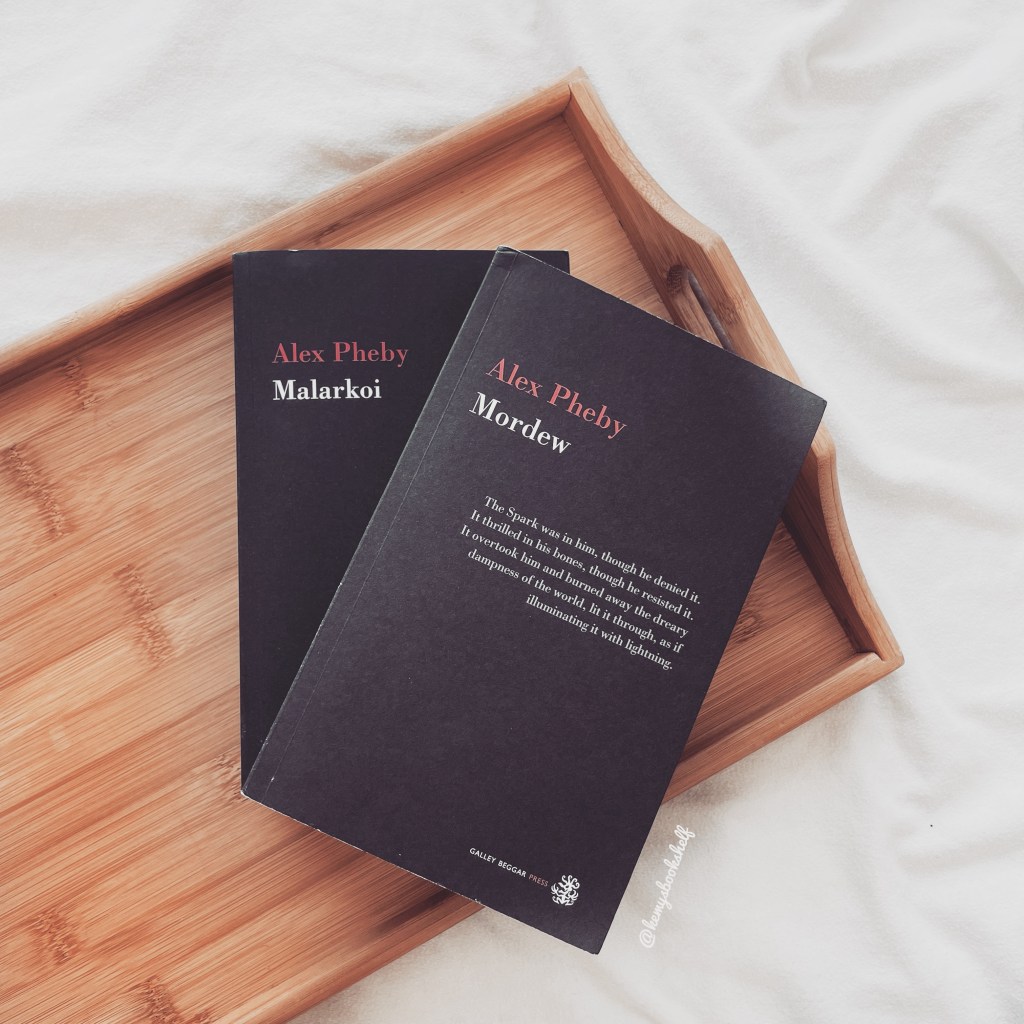
“The southern slums of the great city of Mordew shook to the concussion of waves and firebirds crashing against the Sea Wall. Daylight, dim and grey through the thick clouds, barely illuminated what passed for streets, but the flickering burst of each bird flashed against the overcast like red lightning. Perhaps today the Master’s barrier would fail, drowning them all. Perhaps today the Mistress would win.”
opening line of Mordew, which sets the atmosphere and the plot quite aptly
Where to start? I opened Mordew without knowing what to expect. There is a quite detailed blurb on the french flap of the book. But I did not read it too closely. And it was so detailed as to be uninformative anyway –you don’t get the big picture. Which is a good thing. I don’t really mind plot point spoilers to be honest, but I don’t like to know exactly what kind of adventure and message I will get from the book. I am not sure that makes any sense at all. But moving on…
“There is something about being in a place you don’t know that is both frightening and liberating. When you are in your proper place you are secure, even in your misery; away from that place your security is gone, but so also are your obligations. You can be a different person in a different place”
I won’t give you any plot details. You can find blurbs here and there (spoiler about the ending of Mordew in this last one). But I will give you atmosphere and writing. They are the most important elements when it comes to reviews, in my opinion.
So Mordew. Mordew is a territory, an island. Mordew is mind-bending. Because its structure is intricate, its story murky and its destiny uncertain.
“Fortunately for the boys, the colour of a slum child and the colour of his surroundings is very much alike, and there is no better camouflage – drab greys and browns, mottled curves and dulled edges – than simply to be part of the place in which one finds oneself.”
Mordew is dark. Because power dynamics and veiled purposes make for a deceitful nightmare, with unpleasant surprises at every turn.
“One wraith was smiling, wooden teeth wired into wooden gums, and its tongue was wet between the upper and lower set. Its eyes were wide and staring, delighted by something that was lost on the living people there. After a little while it spoke. ‘We have been waiting for this moment so long, Master.'”
Mordew is poisoned by magic, imbued by adventure and powered by longing. It gains levity in friendship and gathers light with banter.
“Anaximander looked at Nathan. ‘If this, now, is the way matters are going to proceed, I would not object at all, if such a thing were to meet your approval, Nathan Treeves, to a rubbing of my back. Then you might proceed to scratch behind my ears, preparatory to tickling my stomach. Again, only if this is something you would feel naturally inclined to offer.'”
Its figure is ever shattered and built anew, like Nathan’s trust in those around him.
“He understood now: they would come, all of them, the boys, the copper slaves like him, street scum, slum filth. The longer he stayed the worse it would be, waves of them would be sacrificed against him, drawn from the vats like they had been drawn to Rekka. His vengeance would be acted out on the blameless, never on the prime mover, never to any effect, only loss.”
Malarkoi is philosophical and detailed. It takes you longer to get through it.
“The Children of Cren – the person-headed, snake-bodied enemies of the cattle-headed people, and denizens of the second level of the Golden Pyramid of Malarkoi – considered themselves sophisticated to a degree unmatched in the Pyramid realms.”
You pause and muse at the implications of the minutiae that are revealed, or marvel at the new hidden depths that are probed.
“It was some while before he looked up, and the tentative glint of knowledge in his eyes often receded in the face of his ignorance and doubt, the two things coming like the peaks and troughs of a wave, a stillness in the waters of which would have indicated full comprehension.”
Malarkoi is haunted by an elusive goddess – the Mistress, who has created a world of monstrous wonders.
“None of these futures felt germane to the business at hand, so Sirius turned his attention towards the fact that the raft of wreckage that he rested on was, quite definitely, being carried out to sea, away from Mordew.”
It blurs the frontiers between good and evil, and probes the consequences of heavy inheritances.
“It was all of these things and also a mausoleum of the land, everything that should have been above laid to rest here – the ground, the forest, the grass, but also the bones of the creatures tangled where they could be tangled, trapped by an ankle bone in a clump of roots – this a weasel- wedged by the horns between a rock and a branch – a bull – trapped beneath a fallen limb – a man, his eye sockets home to urchins, one black and one white.”

Together these two books build a very intriguing mythology. And what’s more, they both hint at a world closer to ours that may wage a war on this oneiric (nightmarish) corner we have been exploring. I am very excited to see how Waterblack puts everything together. And it seems that I won’t have to wait much longer.
“Our firebird is born to no mother, not even an egg, and when he comes out, he is covered in the blood of his sacrifice. Sticking, congealed, his beak resists his first cry and there is no one there to slap sound out of him. To protest his arrival in our world he must do it through his own effort – there is no mother to lick the mucous plug away, there is no mother to gnaw his umbilicus.
There is no one for him.”
I read these books some months ago. I should have published my review soon after finishing (and relishing) them, and I indeed penned the first two paragraphs just after finishing Mordew, but you know, life.
“His room seemed odd – though it wasn’t visibly unclean, it looked dirty, as if colonies of diseases were growing beneath his ability to see them.”
However, there is something to say for vague recollections, deeply imprinted impressions. What stays with you months after matters as much (more?) than what you felt or thought when turning the last page.
What about the writing? Despite weaving an intricate world (unlike anything I have ever read, although I’ve seen people liken it to the celebrated Gormenghast trilogy by Mervyn Peake), Pheby maintains a playful tone that propels the story forward.
“When he woke, the alarm was still ringing, and his mouth tasted of blood. Above him the Vanguard were settling off to bed, roping down things, laying out things, unknowing of his face peering up at them. Down at them? A few of them were painting their cross on a gigantic crossbow, and the Master felt, from a clenching down in his gut, that he was shortly going to vomit onto them.
Could vomit fall up?”
You amble around his world in a jaunty steps, lifting stones that hide secrets and searching dark tunnels of ominous memories. It’s dark and tragic, yes, but there is a sense of comedy, a gentle irony that makes it all enjoyable.
I highly recommend!
“Between the trees the light from the fire was weak, picking out some surfaces of things but leaving most of them in darkness.”
 Kemy's bookshelf
Thank you for such a thorough review! You really captured the atmosphere so vividly that I feel like I’ve already stepped into Mordew just from your words. Now I’m even more intrigued to pick it up. ❤
LikeLike
Thank you so much for your kind comment. It’s a very unique universe, demanding, but oh so rewarding!
LikeLike